CQI Certificate in Quality Management
Level 3
The CQI Certificate Level 3 in Quality Management provides a good foundation and introductory qualification for new and potential
quality professionals.
The qualification does this by providing an understanding of what
quality management means in an organisational context and the
component parts of the quality management process.
Potential job roles include: Quality Technician, Customer Service Team
Leader, Operations Team Leader, Engineering Technician.
The Certificate level 3 course consists of 5 units (U301, U302, U303, U304, U305). Please see below the course units contents and syllabus. See CQI Unit Matrix
THE PACKAGE
The study packs are stand alone private tuition packages which allows the delegate to work at their own pace through the preset training material.
The study packs include:
- Coursebooks for each Unit - containing tutorial notes and information
- Workbooks for each Unit - containing questions and answers
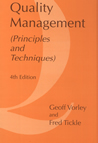
- Text Book - 'Quality Management - Principles & Techniques
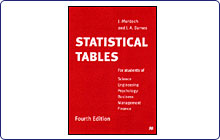
- Statistical Text Book Statistical tables by Murdoch & Barnes
- Assignment briefs for the Units which are assessed by assignment.
- Sample exam papers
- Two year's unlimited tutorial support is provided by telephone, fax, e-mail or written correspondence as required. See QM&T Team
- QM&T Newsletter with all the very latest QA news. Keeping you right up to date and informed on what is happening in the Quality Assurance field.
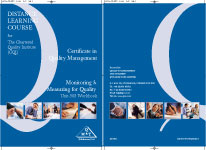
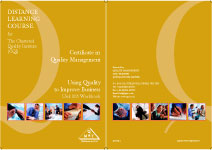
Coursebooks for Units 301, U302, U303, U304 & 305.
 |
 |
 |
| U301 coursebook |
U302 coursebook |
U302 coursebook |
 |
 |
|
| U302 coursebook |
U302 coursebook |
Certificate textbook |
Workbooks for Units 301, U302, U303, U304, U305
Certificate in Quality Management (Level
3)
The qualification consists of the following units:
- U301 - People in quality Level 3 (assignment)
- U302 - Management system models Level 3 (exam)
- U303 - Monitoring and measuring for quality Level 3 (exam)
- U304 - Quality management Level 3 (assignment)
- U305 - Using quality to improve business performance Level 3 (exam)
The above 5 Units must be completed within a 2 year time frame to achieve the Level 3 CQI Certificate qualification.
Exams and Assignments are assessed twice a year (January and June of each year).
For information on how you can use these units in other CQI
qualifications, download the
CQI Qualifications and unit matrix.
**********
Certificate in Quality Management syllabus:
Unit 301
People in quality
|
Unit Aim: To appreciate the impact of organisational values and culture on quality performance and understand how different behaviours can improve business performance
On successful completion of this unit students will be able to:
- Understand the importance of organisational values and culture to quality performance
- Understand behavioural approaches for getting results through people
- Understand the importance of communication for managing quality
CQI assessment method: Assignment
|
Indicative content
|
Principles of leadership and motivation
Group dynamics
• Self directing work teams and Kaizen. • Types of participative performance improvement activities including multi function teams, voluntary improvement activities and suggestion schemes.
Influence of the quality gurus on work organisation
• Professor Ishikawa – combining craftsmanship with division of labour to create synergy
• Each of Dr Deming’s and Crosby’s 14 points.
• Juran’s ‘overcoming resistance to change’.
• Feigenbaum quality responsibility
Organisational support for team activities
• Steering committees, quality councils and other considerations for the support of participative approaches.
• Facilitation and management support for team based improvement activities.
• Training facilitators, team leaders and team members
Communication
• One to one vs. one to many
• Interactive vs. non interactive
|
**********
Unit 302
Management System Models
|
Unit Aim: To understand the spectrum of quality related standards and models, their commonalities and differences, their purpose and benefits to organisations and their underlying principles
.
On successful completion of this unit students will be able to:
.
- Understand the use of quality models in business
- Understand the role of standards in quality assurance
- Understand the use of integrated managements systems within organisations
.
CQI assessment method: Exam
. |
Indicative content
|
Management system models and standards
• ISO9000 / 1 / 4
• Investors in People (IIP),
• EFQM Excellence Model
• Malcolm Baldridge National Quality Award
• Customer Service Excellence Standard
Standards
• Evolution of standards for product conformity and variety reduction, weights and measures, safety, and management systems
• Company standards
Other applications for standards and conformity assessment
• Product certification schemes
• CE Marking
• The role of Government, accreditation bodies, certification bodies, standards bodies, regulatory bodies, professional bodies, national and international quality award schemes, customers, consultants; interfaces.
Integrated management systems
• Common elements of management systems
- Policy
- Document control
- Responsibility and authority
- Audit
- Management review
• Principles required for the integration of management system standards to avoid replication of activities in the management process.
• Examples of standards that can be integrated into a single management system, include some specific named examples of:
- Company standards
- Management system standards
- Regulations
- Sector standards
- Codes of practice
- Customer standards
**********
|
Unit 303
Monitoring and Measuring for Quality
|
Unit Aim: To understand the importance of data collection and analysis as a means for decision making with regard to product and service quality, the use and limitations of the broad range of monitoring, measurement and diagnostic tools and techniques available and their application.
On successful completion of this unit students will be able to:
- Understand the role of monitoring and measuring in making decisions relating to quality
- Understand the use of methods for data collection and analysis.
CQI assessment method: Exam
|
Indicative content
Unit 303
|
Fundamental principles
• Principle of ‘factual approach’ to decision making’ (ISO 9000)
• Types of data:
- variable,
- attribute
- subjective
• Introduction to sampling plans
• Reducing sampling risks
Criteria for selection
• When, where and how much data to collect
• How it should be collected and by whom
Types of data collection
• Data collection methods:
- Process measures
- Key performance indicators
- Surveys
- Periodic sampling
- In process inspection
Tools for data collection
• Inspection and test records
• Automatic data collection
• Time based records (processing speed)
• Database queries and reports / data mining
• Check sheets / tally sheets
**********
|
Unit 304
Quality Management
|
Unit Aim: To understand the principles upon which the quality function is founded and the potential benefits to industry, customers and stakeholders.
On successful completion of this unit students will be able to:
- Understand the meaning of the word 'quality' when used in a work related environment
- Understand how the concept of quality has evolved
- Understand the key components of quality management
- Understand how quality principles can improve business performance
- Understand the use of the 'Plan, Do, Check, Act' (PDCA) cycle within management systems
- Understand process design and improvement
CQI assessment method: Assignment
|
Indicative content
|
Understanding Quality
• Definitions of the meaning of the word quality from a range of sources
The evolution of Quality
• The history and tradition of inspection, quality control and quality assurance up to c1970 (BoQK 1.1)
• The evolution of quality thinking, post c1970 (BoQK 1.2)
Key components of quality management
• Overview of quality planning
• Overview of quality control
• Overview of quality improvement
Principles of quality
• Quality management principles underpinning management systems
• Business benefits – reduce waste, efficiency and effectiveness
• The typical identities of stakeholders, customers and interested parties.
• Customer and stakeholder needs identified as stated (specified) needs and unstated or hidden needs.
The PDCA cycle
• The role of each element of PDCA in quality management and the business performance improvement process.
Process design
• Examples of core business processes and support processes
• Management of key business processes, support processes and the development of a complete management system to deliver customer and stakeholder needs.
**********
|
Unit 305
Using Quality to Improve Business
|
Unit Aim: To provide understanding of the principles of continual improvement as part of a general understanding of the role of the quality function and as a foundation for future involvement in business improvement activities.
On successful completion of this unit students will be able to:
- Understand continual improvement and its application to business
- Understand the process for identifying and prioritising areas for improvement
CQI assessment method: Exam
|
Indicative content
|
Principles and benefits
• Principle of continual improvement
• Different reasons for change such as problems in the process, changes in environment
• Improvement project case studies showing benefits obtained
The problem solving process
• Application of a range of problem solving tools to suit the problem encountered
• Methods for data analysis such as:
- paired ranking
- Pareto analysis
- histograms
- stratification
- scatter plots
• Means of identification of causes of problems inherent in a process including:
- brainstorming
- cause and effect diagrams
- relationship charts
- process mapping
- process analysis
- spot or defect location charts
|
**********
|