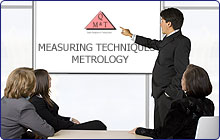
Measuring Techniques - Metrology
INTRODUCTION
The Basic Dimensional measuring techniques (metrology) course is prepared for those who wish to learn basic principles of precision measurements. This course is designed for the entry-level personnel and inspectors. It covers a wide scope of fundamental topics in Dimensional Measurement (Metrology). The focus of this class is on basic technical terms and principles.
Business Benefits
To enable delegates to:
- Understand and confidently use all types of measuring equipment shown below
- Complete such measurements in a practical work setting
- Interpret specifications and drawing for measurement purposes
- On passing the Measuring Techniques Course be QM&T Certificated Metrology Inspector
Who Should Attend?
Inspectors, Testers, Quality Engineers & Technicians, Quality Managers, anyone who requires basic instruction in measurement.
Course Structure
Items covered include:
- International Standard of Length, 1m and the basic Metric system
- Length Standards and traceability
- Gauge Blocks-most accurate, commercially available length standards (also called end standards)
- Selection of right measuring tools for the job
- Tolerance specified and geometry of parts
- Absolute Measurements as Comparison Measurements Example: Micrometers as Dial Indicators
- Resolution (smallest reading), Accuracy and Precision
- Fixed, or Go/No-Go limit gauges (also called attribute gauges)
- Micrometers; Inside, Outside, Depth, and Digital Micrometers
- Principles of Micrometers
- Reading conventional (line-graduated) Micrometers
- Calipers; Vernier, Dial, and Digital Calipers
- Principles of Vernier Scale, line graduated Calipers
- Abbe's law in measurement
- Indicators; Dial, Test, and Digital Indicators
- Principles of Dial Indicators-Balanced as Continuous Dial
- Electronic Gauge head reading
Course dates and cost
|